
Q&A with Jared Jordan, Founder of Alignd.
by OKSBE Staff • Wednesday, June 24, 2026

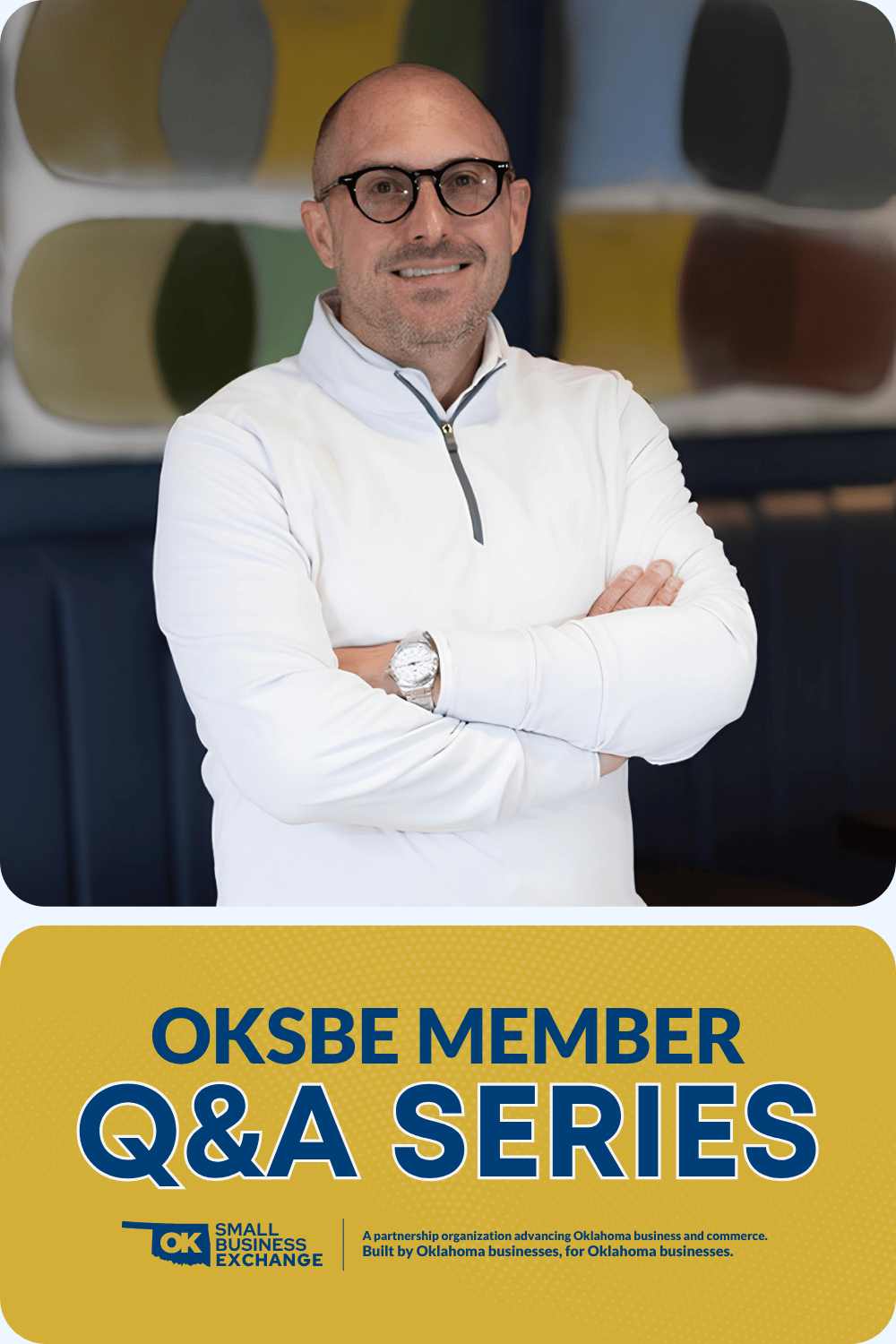
Headquartered in Tulsa, Oklahoma, Alignd. helps owner-operated businesses build companies that don't depend on any one person to run. Founder Jared Jordan brings a proven growth framework, clear vision, real strategy, and the structured accountability most companies skip, drawing on 24 years in the operator's chair, including nearly a decade as CEO of Summit Club.
What does your business do and who do you serve?
Alignd. helps business owners build a company that doesn't need them in every decision. Most owners I meet are the bottleneck and the backup plan at the same time. I set up a simple growth framework for the business: a clear vision, a real strategy, and the boring accountability work that actually makes a team run well. If you've ever come back from a long weekend to 200 emails and a small fire, that's the problem I solve. I work with owner-operated businesses, generally in the $2M to $50M range. The kind of companies that are the backbone of Tulsa.
Alignd. is young. I launched it in February 2026. The experience behind it is 24 years, most of it in the operator's chair, so the firm has a new logo and an old soul.
What inspired you to start your business?
Honestly? I missed it.
I spent nearly a decade as CEO of Summit Club, one of the premier city clubs in the Midwest and a place that will always be special to me. The team there did some really amazing work. But the part I loved most was never about the numbers. It was building the teams that got better than they thought they could be, and watching people grow into roles they didn't know they wanted.
When I stepped down, the title wasn't what I missed. It was that work: helping people build something they're proud of. Alignd. is how I keep doing the part I loved. I'd rather help ten teams climb than sit around missing one.
What moment made you feel especially proud or validated as a business owner?
Awards are kind, and I'm grateful for them. But the validation I carry is about the things you build that outlast you. Opening and launching MixCo in 2014 and Barstream in 2015 taught me what it feels like to take an idea and make it real. That's its own kind of proud.
The one that stuck, though, was at Summit. The team I built there with Bill Lyle, our Executive Chef, and Derrick Shanklin, our Assistant GM, turned into something special. We grew a front of house and a kitchen that belonged in the same sentence, which is harder than it sounds. The proudest part is that it's still running at an extremely high level. Anybody can have a good year. Building people and a culture that outlast you is the harder thing, and watching Bill and Derrick keep that standard alive is the truest scorecard I've got.
What has been the biggest challenge you’ve faced as a business owner so far?
Starting over with a blank sheet of paper is humbling. For years I had a team, a budget, and a building. Now it's me, a thesis, and a calendar I have to fill myself. Turns out building a pipeline is a different muscle than running an operation, and I was rusty. The honest part is that my biggest challenge is the exact thing I help clients fix: a business shouldn't depend entirely on one person. Including mine. I take my own medicine. Some days it tastes terrible.
What makes your business different from others in your industry?
Most people in this space coach from the sidelines. I sat in the chair. I've made payroll, negotiated with lenders, sweated a renovation, and made the hard calls that protect both the bottom line and the people behind it.
The other difference is I don't hand out generic advice. I bring a proven growth framework built on the Pinnacle approach and tailor it to your business: vision, strategy, and the structured accountability most companies skip.
My core belief is a little contrarian. When leadership turnover wrecks a company, it's usually a structural failure, not a hiring failure. Fix the structure and the people problems shrink.
What’s one piece of advice you wish every business owner knew?
If your business can't run without you in the room, you don't own a business. You own a very demanding job you can never quit.
Build it so it runs without you. Not so you can vanish, but so you get to choose where you spend your time. That one shift changes everything downstream: your ability to grow, to hire well, to sell someday, to take a real vacation. Most owners are the bottleneck and the backup plan at once. The whole job is getting you out of both seats.
Why is being an Oklahoma-based business important to you?
I was built here. My career, my family, my friends, the teams I'm proud of, all Oklahoma. There's a way business gets done here that I don't take for granted. People still do what they say they'll do. A reputation is currency, and it compounds. My work takes me beyond Tulsa now, but the standard I hold myself to is an Oklahoma one. I support non-profits like Philbrook, the Tulsa Day Center, and Family & Children's Services because this community invested in me long before Alignd. existed, and I intend to pay that back with interest.
How have relationships with other Oklahoma businesses helped you grow?
Almost everything good that's happened to Alignd. traces back to a relationship. Oklahoma is small in the best way. Everybody is a phone call or a handshake away. My early traction has come from people who knew my work and were willing to make an introduction: CPAs, attorneys, bankers, fellow operators. I'm deliberately building a referral network with the professionals who sit closest to business owners, because the best clients don't come from an algorithm. They come from someone you trust saying, “You should talk to Jared.” I don't take a single one of those for granted.
What trends or changes should business owners be paying attention to in your industry?
Watch the demographics. Nearly half of U.S. small-business owners are 55 or older, yet only about 54% have a succession plan in place. McKinsey projects roughly one million boomer-owned businesses will be sold by 2035, an estimated $5 trillion in value. The press calls it the “silver tsunami.”
Here's the catch most owners miss: a business that depends entirely on its owner is very hard to sell, and sometimes hard to even give away. The companies that transfer well are the ones that don't depend on a single person to function. So whether you want to exit in three years or thirty, the work is the same. Get the business to run without you. That's not just an exit strategy. It's a better way to own the thing while you still have it.
What upcoming project, goal, or opportunity in your business are you most excited about right now?
Two things. First, the practice itself. The goal is ten great clients by spring of 2027. Owners I genuinely want to spend the next decade helping. Quality over volume.
Second, the timing. That succession wave is hitting Tulsa businesses right now, and most owners aren't ready for it. Helping local companies get built to last, and built to one day hand off well, is work that matters here.
But if I'm honest, the thing I'm most excited about is simpler. More Tulsa owners building businesses they're proud of that don't run them into the ground. That never gets old.
To learn more about Alignd., visit alignd.guide.